Released in 1934, The Black Cat is unusual for a Universal Studios horror picture because it features none of their signature monsters like Dracula, Frankenstein’s Monster, the Mummy, or any monsters, at least no supernatural ones. However, The Black Cat does feature the biggest horror stars of the era, Bela Lugosi and Boris Karloff giving some of the best performances of their careers. The title card says the movie is “suggested by the immortal Edgar Allan Poe classic” but that claim is more than a stretch as the only thing the plot has in common with the Poe short story is the inclusion of a black cat in one scene. Fortunately, the story invented by screenwriter Peter Ruric and co-writer and director Edgar G. Ulmer makes for a superbly dark and creepy old-school horror picture.
While traveling on the Orient Express through Hungary on their honeymoon, newlyweds Peter (David Manners) and Joan (Julie Bishop) end up sharing a train compartment with Dr. Vitas Werdegast (Bela Lugosi), who is very polite but mysterious. They also share a carriage but after an accident Dr. Vitas takes them to the closest shelter, which happens to be his destination: the home of an “old friend,” Hjalmar Poelzig (Boris Karloff). We learn that Vitas and Poelzig are actually deadly enemies. During the Great War Poelzig betrayed their army, leading to a massacre and Vitas being sent to a prison camp where he says, “the soul is killed slowly.” Poelzig built an elaborate estate on the site of the massacre, kidnapped Vitas’s wife, whose body he keeps preserved in a glass case, and is now married to Vitas’s daughter. Poelzig is also a Satan worshiper and wants to use Joan in a ritual. In short, he is a very bad guy. It is no wonder why Vitas is so set on revenge. Vitas has also been driven mad from his time in the prison camp and is so set on getting vengeance that even learning that his daughter is still alive doesn’t alter his revenge mission.
The highlight of The Black Cat is watching Lugosi and Karloff duel, first with their words and later with their fists. Vitas and Poelzig have a strange respect for each other even though their hatred for each other permeates every scene. Karloff is excellent as the sinister and evil Poelzig. We first see him in silhouette and his tall, gaunt, and slender figure is used to great effect. Karloff’s lilting voice also adds an extra creepy layer to his dialogue. Lugosi gets to be the hero, sort of—anti-hero might be a better description. He has been so overwhelmingly wronged by Poelzig that he has your sympathies even though his plan is to horribly torture Poelzig. His main redeeming quality is that he wants no harm to come to Peter or Joan and goes out of his way to protect Joan (Peter proves to be superfluous, even misunderstanding Vitas’s rescuing Joan). As Vitas, Lugosi brilliantly delivers many wonderful and eerie speeches that do as much to create a chilling atmosphere as the setting and score.
Poelzig’s home is not a creepy gothic castle but a surprisingly modern looking estate. Peter describes it as a “nice, cozy, unpretentious insane asylum.” The lair where Vitas’s wife’s preserved body is kept and the satanic ritual is performed is a mix of dungeon and mad scientist’s lab. Vitas’s torture of Poelzig happens offscreen but still makes you squirm. The Black Cat was made before the puritanical Production Code heavily restricted the content and subject matter of all movies. With its plot dealing with violent revenge, torture, satanism, implied rape, and necrophilia, there’s little chance it could have been made after the code became strictly enforced. Because of this, The Black Cat still retains some surprising shock value even after nearly 90 years. This movie is not nearly as well known or widely seen Dracula (1931)or Frankenstein (1931),but it is as deserving of classic status, and in many ways it is the scarier classic horror movie.
The Black Cat airs on TCM on Halloween at 1:30 PM CT and is currently streaming on the Criterion Channel.
The first time in which all Academy members voted on the
selection of nominees and winners, instead of a 5-member selection board
as with the first two awards ceremonies, was at the 3rd Academy Awards. The ceremony was held in November to be closer to the end of the
qualifying year (August 1st, 1929-July 31st, 1930).
Though still in its nascent stages, the Academy Awards at this time already
feels like the modern awards. There were 5 Best Picture nominees (then called
Outstanding Production) that included a big budget epic, a feel good musical
romance, a historical biopic, a sociopolitical drama, and a daring portrayal of
adult relationships.
The films themselves feel as though they have come a long
way since the switch from silent to sound just a couple years prior. The sound
quality of all of the nominees is greatly improved from the 2nd Academy
Awards nominees—the sound quality of which depended on how close the actors
were to a hidden microphone. Improvements with camera and microphone technology
meant that actors did not have to huddle around that hidden microphone and the
camera did not have to be far away and motionless—in some cases sealed in a
soundproof booth—so the microphone would not pick its noises. The camera and
actors could move more freely which allowed for more interesting cinematography
and staging. There is still that ambient hiss that pervades throughout early
sound films, but there’s no need to crank up the volume. Every sound in these
films is clearly audible and the sound design and effects are used to help and
enhance the story, not just dazzle the audience as a novelty. These films
seem to have learned that dialing back on sound and using just images is still
as effective as it was with silent movies. All
Quiet on the Western Front, The Big
House, The Divorcee, and The Love Parade all have memorable scenes
which use the lack of dialogue for effect on the audience. The sound quality of
movies with outdoor scenes is greatly improved from the 1st outdoor
talkie, In Old Arizona. With these
films sound is now just another element of movies, like costumes and music. It
works in the background to help tell the story. The silent era was now indeed
just that, an era with beginning and end dates. There were not “talkies”
anymore, there were only movies.
The films of this qualifying year seem to be more aware of
and willing to deal with social issues. Every film from the birth of sound
until the summer of 1934 is a Pre-Code film, made before the enforcement of the
Hays Code which strictly regulated the content and subject matter of films. All Quiet on the Western Front and The Big House make their audiences
confront the realities of groups of people society sends away and doesn’t think
about too much afterwards. I can understand why the Academy voters selected All Quiet on the Western Front as the
Outstanding Production of that year. The Great War was a major event that still
weighed large on that generation. It was a daring portrayal of war that mass
audiences likely had not seen and showed what veterans likely would not readily
share. It is a fine classic war film, though dated, but I would cast my vote
differently.
The film from this group of Outstanding Production nominees
that I would most want to see again and would most readily recommend to anyone,
classic film fan or not, is The Divorcee.
The best thing about the film is its main character, Jerry, and Norma Shearer’s
Oscar winning performance. I do not think the film judges Jerry for “living it
up” after her divorce or for not waiting for men to come to her, but it does
treat that behavior as an aberration. Jerry never becomes immoral, she only
wants equality. Having a character like this as the star of a movie, no matter how
the film ends, is an accomplishment of sorts. Another accomplishment The Divorcee makes is finding the right
balance between social consciousness and entertainment.
The Divorcee
begins and ends as a romance, has drama in between, and never
feels uneven. Whether with fun scenes of lavish parties or serious scenes between Jerry
and her sister, the film maintains a steady pace. The male characters that
surround her (Ted, Don, and Paul) are entertaining characters as well. The
comedy in The Divorcee certainly holds up and, along with the performances,
makes it a lively film. Certain camera shots and sequences keep it visually
interesting too.
A modern viewer might be disappointed in The Divorcee’s view of divorce as an
unacceptable social ill, but I also think a modern viewer will be far more
sympathetic and understanding of Jerry and her actions. The film does not take
a stand against double standards and unfairness and inequality toward women,
but in simply acknowledging that such things existed The Divorcee was bold and daring for its time. Its values may be
dated, but The Divorcee is no less
entertaining.
The Big House, released
in 1930, is considered by classic film fans and film historians to be the first
realistic prison movie produced by Hollywood. MGM production chief Irving Thalberg
sent screenwriter Francis Marion to San Quentin State Prison to observe real
prisoners, guards, and conditions inside prison walls. She interviewed inmates
and prison staff alike. The result was a screenplay that won Marion the Oscar
for Best Writing, making her the first woman to win a non-acting Academy Award.
The Big House
stars Chester Morris, Robert Montgomery (who also appeared together in The Divorcee), and Wallace Beery as
cellmates. Each handles prison life in a different way. Robert Montgomery plays
Kent, who has just begun a 10-year sentence for killing someone while driving
drunk. He is put in a cell with Morgan (Chester Morris), a thief on the verge
of parole, and Machine Gun Butch (Wallace Beery), a ruthless multiple murderer
that runs the cellblock. Beery had been out of work for more than a year when
cast in The Big House. Though Beery
had been a successful character actor during the silent era and done a
successful sound test, his contract was dropped by Paramount when the studio
converted to sound. Beery’s performance earned him an Oscar nomination for Best
Actor and his career rebounded.
Directed by Francis Marion’s husband, George Hill, The Big House is well paced and well
shot. The lighting design of certain scenes with low light and harsh shadows is
reminiscent of Film Noir, a subgenre that is defined in part by its use of
shadows and antiheroes that wouldn’t be fully developed until the mid-1940’s.
As Morgan is marched from the cell block down to the dungeon for solitary
confinement, the light fades and shadows envelope the frame. Morgan and Butch,
also in solitary, call out to each other over the shouts, screams, and singing
of the other inmates. All we see is the empty, dark hallway as the scene slowly
fades out.
There is a brief respite from the bleak drudgery of prison
life when Morgan escapes after losing his parole. He visits Kent’s sister,
Anne, with whom he has been infatuated since seeing her picture. Anne goes from
being suspicious of Morgan to falling in love with him rather quickly. It is
his brief time with her that convinces him to go straight after he’s captured
and taken back to prison. When Morgan won’t go along with Butch’s big escape
plan, Butch thinks that Morgan has turned into an informer. The climax of The Big House is a full-blown riot and
shootout between guards and prisoners. Each side has pistols, rifles, and Tommy
guns. At one point army tanks roll into the fray.
The performances all around are pretty good. The first
character we meet is Kent as he is being processed into the prison. As he
unravels and buddies up to the prison’s main informer, Morgan emerges as our
sympathetic hero. Montgomery is great playing a character that is not cut out
for prison, scared, and just trying to get by and get out, misguided as he
might be. Chester Morris is quite good as Morgan; when he decides to go
straight we believe his change. The warden, played by Lewis Stone, is also an
interesting character. Neither cruel nor corrupt, he is a reasonable,
benevolent man. He sees clearly the problems of his prison and the prison
system as a whole, but is powerless to make any changes to better the
situation. He tells a guard that the prison was built to hold 1,800 men but has
3,000 prisoners. They want to lock them up, he says, but don’t want to provide
for them after they’re locked up. The guard replies, “The whole prison system
is cock-eyed.” The flaws of the prison system that Francis Marion observed and
wrote into her screenplay in 1930 still remain unfortunately accurate.
Douglas Shearer, Norma Shearer’s brother, won the first
Academy Award for Sound Recording for his work in The Big House, and the sound design is very good and effective
indeed. The first thing we hear is the sound of marching footsteps of
prisoners. That sound is repeated throughout the film, and it is also the last
thing we hear over the “The End” card instead of closing music. The footsteps
on hard floors and gravel, food slopping on plates, and crowd noises are all
pronounced and important to the effectiveness of the images. The sound cues in The Big House do more than just match
what happens on screen, they underline and emphasize it. The shots of dozens
upon dozens of prisoners marching in line, often from the shoulder down, or
filling the mess hall, sitting at the same time, being served at the same time,
all wearing the same uniform and making the same sounds suggests that humanity
and individuality have been stripped away from these men.
I think The Big House
is as realistic as a film of this time could be, even during the Pre-Code era. The Big House probably would not hold up
to more recent prison dramas, but it is still an entertaining film. It has good
performances from all the main players, great cinematography, a great
screenplay, and even a dark sense of humor. Morgan warns Butch against including
a certain violent prisoner in the escape, but Butch replies, “sure, Hawk cut
his mother’s throat, but he was sorry about it.”
The Big House has
every prison movie cliché you would expect to see in a prison movie: escape
plans, stool pigeons, riots, cruel guards, bad food. However, like many genre
films from this time period, it is the source of those clichés. All of the
beats and plotlines still work and are still effective and entertaining.
Nominee: Cosmopolitan, MGM
Producer: Irving Thalberg (uncredited)
Director: George W. Hill
Screenplay: story and dialogue by Frances Marion, additional
dialogue by Joe Farnham and Martin Flavin
Cast: Chester Morris, Wallace Beery, Robert Montgomery,
Lewis Stone, Leila Hyams
Release Date: June 24th, 1930
Total Nominations: 4, including Outstanding Production
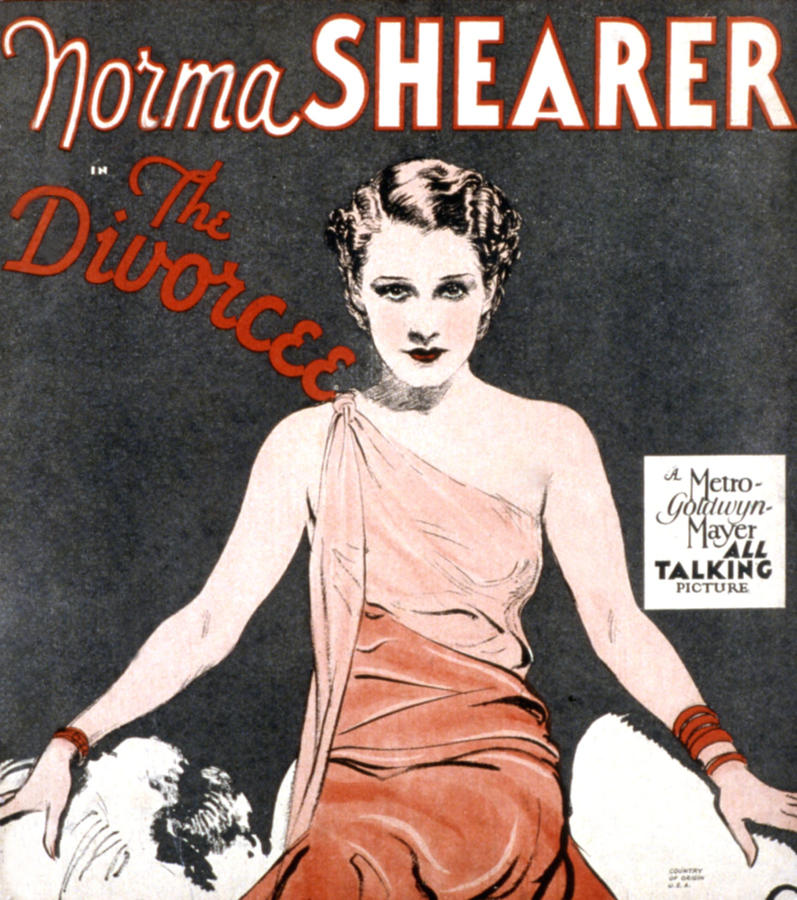
The Divorcee’s
nomination for Outstanding Production shows that the Academy’s interest in
controversial but popular films existed since its early years. This film is
based novel The Ex-Wife by Ursula
Parrott, which was also popular and controversial when it was released. The
controversy of the novel and film stems from its subject matter: marital
infidelity and divorce. MGM was hesitant to be associated with the racy novel,
so the title of the film adaptation was changed to The Divorcee, a classier way to say “ex-wife” I suppose. This would
not be a racy or controversial film today, but it remains quite entertaining. The Divorcee has interesting characters,
good performances, and a good sense of humor and drama. The Divorcee was released on DVD in the TCM Archives Forbidden Hollywood Collection Volume 2, but this set has since gone out of print making tracking down a copy slightly difficult and expensive (it currently sells on Amazon.com for $130). However, it airs occasionally on TCM, and I very much recommend watching it should it be on the schedule.
MGM may have acted like they did not want to court
controversy, but is seems as though they didn’t put great effort into making The Divorcee any less controversial. The Divorcee may be tame and even
conservative by 21st century standards, but modern viewers should
keep in mind that this was a time when the subject of divorce, let alone female
sexuality, made for impolite and improper conversation. This movie pushed
boundaries, addressed the double standards of male vs. female infidelity, and,
most of all, it had a good, well-developed, strong, and interesting female
character as the lead.
I had been looking forward to watching The Divorcee since I haven’t seen many Pre-Code movies. Pre-Code
Hollywood refers to the brief time period after the advent of sound films until
the strict enforcement of the Hays Code in 1934. At this time films were not
protected under the First Amendment because of a Supreme Court ruling in 1915,
which declared films were purely commercial and not art. That unfortunate and
idiotic decision would be overturned in 1952. The Hays, or Production Code, was
actually created in 1930, but it was not enforced until the summer of 1934 when
every film was required to have a Production Code seal of approval before it could be released. The
Production Code severely regulated and limited a film’s content and subject
matter. Before then movies were free to contain violence, risqué subject matter
(like infidelity and divorce), and, most notable of all, highly suggestive
innuendo.
The coveted title role of The Divorcee went to Norma Shearer, but it did not come easy to her even though she was married to MGM
production chief Irving Thalberg. He originally wanted to cast Joan Crawford.
At that time, Shearer was known for playing “lady-like” characters, so Thalberg
thought she lacked the sensuality the role would require. To prove her husband
wrong, Shearer had a series of photos taken of her posing provocatively in a
revealing dress. Her plan worked. Thalberg cast her and she won Best Actress at
the next Oscars. Shearer’s nomination, however, was for The Divorcee and her
performance in another film,Their Own Desire (1929). When she was announced as the
winner, only The Divorcee was specified and the reason for this remains unknown
even to Academy historians.
The film begins with a group of friends having a getaway
party at a country house. Jerry (Norma Shearer) announces her engagement to
Ted, played by Chester Morris, much to the poorly hidden disappointment of her
other suitors, Paul (Conrad Nagel) and Don (Robert Montgomery). Paul gets very
drunk but still drives a car full of people, including Jerry’s sister, Dorothy,
down a winding road. The car crashes and Dorothy is disfigured. As Jerry
marries Ted in a pretty ceremony in a church, Paul marries Dorothy out of pity
in a hospital room. After three happy years, Jerry discovers that Ted has been
unfaithful and responds by having an affair of her own, with Don. Jerry and Ted
divorce, and then Jerry decides to live it up.
I was worried that The
Divorcee would be tonally uneven with the first half being light and
romantic and the second half being mostly dramatic, such as with The Crowd (1928) and The Love Parade (1929). Like those
films, it does begin as a light romance, then becomes a drama but never becomes
too heavy to be entertaining. Though the second half of the film is where all
of the drama and tension lies, it is not devoid of comedy. The Divorcee has a good sense of humor and delivers laughs at a
steady, consistent pace. In a scene late in the movie, Don runs into Ted in New
York. Ted is a mess from the divorce. The scene grows tense as Ted describes to
Don what he’d do if he ever found the man with whom Jerry had her affair. It’s
an awkwardly funny and tense scene that is capped with a good visual punchline
from Montgomery.
The tagline for The
Divorcee asked the scandalous question: If the world permits the husband to
philander, why not the wife? When Jerry and Ted become engaged they agree that
their marriage will be a partnership and they would be equals. The film takes
subtle steps to suggest that Jerry is the equal of her male counterparts. In
the novel, the main character’s name is Patricia, but— according to the DVD
commentary by film historians Jeffrey Vance and Tony Maietta— was changed to
Jerry for the film to represent gender equality. Vance and Maietta cite other elements
like Jerry wearing masculine clothing (trousers) in the opening scene and her
turning down Don with a polite handshake as aspects showing that Jerry would
treat people and situations the way a man would, not the way society dictated a
woman of the time would. I concur with their assertions. When Jerry confesses her
infidelity to Ted, which she feels very guilty about, she begs him to remember
what he told her about his own affair: it didn’t mean anything. As Jerry
confronts Ted with this role reversal, the movie confronts the audience with
the double standard towards female infidelity. Ted does not take it well.
Jerry’s indiscretion is done in part as an act of revenge, but also an act of
equality.
I can see why Shearer want to play the part of Jerry; it’s
an interesting, well-developed, and challenging role for any actress to play. The
great thing about Jerry is that even while “living it up” she is never indecent
or immoral. The film’s climax is a test for her character: she runs into Paul
who tells her that he still is and always has been in love with her and is
ready to leave his wife, her sister, for her.
The Divorcee has
everything I’d hoped to see in a scandalous Pre-Code movie. The parties the
characters attend throughout the movie are big, glamourous, and ornate with
balloons and streamers, and lots of alcohol, even though the movie was made during
Prohibition. The parties are what you think of when you imagine parties of that
era. It is interesting to see how films of the Pre-Code era managed to be
risqué without being crude or crass. The
Divorcee, like all Pre-Code films, implies more than it shows which ends up
making certain scenes more provocative and effective. The movie shows us Jerry
sitting close to Don in a taxi with a devious look on her
face. The next thing we see is a shot of a window and curtains closing.
The Divorcee has a
fair share of visually interesting moments beginning with a shot of everyone at
the country house standing in the doorway watching Jerry and Ted. The scene of
a drunken Paul driving a speeding car down a winding road is already tense enough,
but the POV shots of the road speeding toward the screen intensifies the danger
and suspense. Perhaps the most memorable sequence is a brief montage of Jerry
meeting men after her divorce. She is dressed glamorously and her hair is done
up gorgeously. The film shows us each man’s hand holding her hand. She accepts
jewelry from one of the gentlemen saying, “I’ve heard of platonic love but I
didn’t know there was such a as thing as platonic jewelry.” The movie leaves it
up to the audience to decide what happens before or after each shot.
I found The Divorcee
quite entertaining as both an attempt at social commentary and as a romance
film. By addressing the real and stressful moments that often do rear their
ugly head on a happy couple, The Divorcee
becomes a film of substance and emotion. While its ultimate conclusion seems
old fashioned or “traditional” by today’s standards, it also ends with a happy
couple, which fits the tone of the movie. It’s clear to any modern viewer that
the film treats divorce as something that is detrimental to everyone and seems
more forgiving of male infidelity, however, The
Divorce as a whole should not be disregarded because of these dated aspects.
I hope that modern viewers won’t dismiss it as a quaint but unsuccessful
attempt at a feminist movie. It is a glimpse at what a particular era thought
of marriage, infidelity, and sexuality. It is also enjoyable to see a strong
female character as the lead in a film from the 1930’s—something that remains
unfortunately infrequent in films of today.
Nominee: MGM
Producer: Robert Z. Leonard
Director: Robert Z. Leonard
Screenplay: continuity and dialogue by John Meehan,
Treatment by Zelda Sears and Nick Grinde, based on the novel Ex-Wife by Ursula
Parrott
Cast: Norma Shearer, Robert Montgomery, Chester Morris,
Conrad Nagel
Release Date: April 30th, 1930
Total Nominations: 4, including Outstanding Production
Win: Actress-Norma Shearer
Other Nominations: Director-Robert Z. Leonard, Writing-John
Meehan