Showing posts with label Frankenstein. Show all posts

Thursday, March 5, 2026

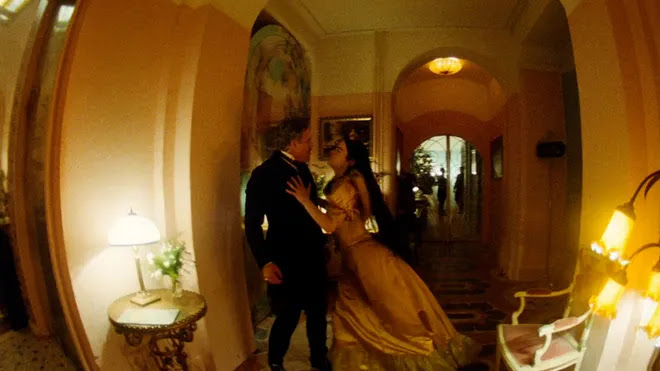
Best Pictures #121: 2025 (98th) Academy Awards Best Picture Nominee: Guillermo del Toro's Frankenstein (2025)

by A.J.

Best Pictures #121: 2025 (98th) Academy Awards Best Picture Nominee

"What manner of creature is that? What manner of devil made him?"
I am a fan of director Guillermo del Toro, however, it always seems to be a coin flip whether I'll like his next movie or not. Mary Shelley's Frankenstein is one of my favorite books and holds the rare distinction of being a book I have read more than once. So, I was more trepidatious than excited to see del Toro's adaptation of Frankenstein. There have been so many Frankenstein movies from the silent short in 1910 to the landmark Universal monster movie in 1931 to many, many more and now to del Toro. With so many versions of Mary Shelley's story, so many variations, so many re-imaginings, do we really need one more? The answer is yes, if it is this one.
It’s no surprise that this was a passion project for del Toro, who has been obsessed with the novel and 1931 film, directed by James Whale, since childhood. His wonderfully macabre visual style, approach to certain themes, and ability to create sympathetic portrayals of monsters make Frankenstein the perfect story for him to tell. Even more than Pan's Labyrinth or The Shape of Water, this feels like the ultimate Guillermo del Toro movie. It is the movie he was meant to make. 
The plot is, dare I say, familiar. I read some reviews that claimed this adaptation was more faithful to the novel, which is a sign that someone has not read the novel. This is something that gets said whenever a movie includes the framing device of the arctic expedition that discovers Frankenstein and the Creature. del Toro's adaptation does begin with an arctic expedition trapped in the ice that comes upon a weary and ailing Victor Frankenstein who tells his woeful tale to the captain. Of course, del Toro makes sure that the Creature also gets to tell his tale. 
In this version, young Victor Frankenstein learned the basics of medicine from his cold and demanding father (played by Charles Dance, of course). At university Victor’s (Oscar Isaac) boundary pushing experiments and ideas catch the attention of the eccentric Harlander (Christoph Waltz), who agrees to bankroll Frankenstein’s experiment to create a new and improved man. Frankenstein becomes infatuated with Harlander’s niece, Elizabeth (Mia Goth), who is engaged to his younger brother, William. The movie takes its time before the Creature is introduced; fortunately none of that time is wasted and Jacob Elordi as the Creature does not disappoint. 
Like Sofia Coppola in Priscilla, del Toro uses Elordi’s 6’5” stature to overwhelming effect. The special makeup effects are quite impressive (Make Up and Hairstyling are just one of a total 9 Oscar nominations), and all the more impressive because they do not hide or distract from Elordi’s performance. He effectively conveys the longing and anger of the Creature so well articulated in Mary Shelley’s novel. Elordi has earned a Best Supporting Actor Oscar nomination, the film’s only acting nomination. Neither a trophy nor a damsel, Mia Goth as Elizabeth is the promise of comfort and safety and love for Victor, William, and the Creature. Her compassion is the first kindness that the Creature knows. Oscar Isaac is at his best when playing mad scientists (see also Ex Machina for further proof and another excellent performance not nominated by the Academy). Isaac is delightfully over the top, clearly having fun with the role, and the movie benefits from it. Frankenstein is audacious, rakishly charming, arrogant and also selfish, abusive, and cowardly. One of the first things he does with the Creature is to put it in chains in the laboratory basement. His arc from protagonist to essentially a villain is done with care and Isaac handles Victor’s complexity very well. 
Both the Production Design and Costumes received Oscar nominations, and rightfully so. The story is set in the 1850’s, though things are not quite period accurate. They are, however, accurate to del Toro’s sensibilities. An elaborate statue of an archangel comes to fiery life during a nightmare (inspired by a real waking nightmare del Toro had as a child). The former armory turned laboratory is a bizarre and impractical but visually stunning tower on the edge of a cliff. There is a large chute down the middle from the top of the tower to the basement–reminiscent of the hole in the roof of the estate in Crimson Peak, itself inspired by Poe’s The Fall of House of Usher–that I can’t imagine would serve any real purpose. The costumes, especially Mia Goth’s gowns, follow this same outlandish but eyecatching style.
There is enough of the novel in this adaptation to satisfy a fan like me. There is also enough that is new and different that a viewer, horror fan or not, won't feel like they're watching the same old story. Though one of the great pillars of horror literature and cinema, the Frankenstein story is more macabre and spooky (gothic, you might say) than scary. The best film adaptations tune into Shelley's sympathy for the Creature and that Victor is actually a mad scientist, and even a villain. Mary Shelly created a thematically complex story and that is not lost in del Toro’s version. This movie gets gory and violent at times and it is perfect for a dreary day, a stormy night, or any time you’re in a spooky mood.

Frankenstein is available to stream on Netflix.
Nominees: Guillermo del Toro, J. Miles Dale, Scott Stuber, producers
Director: Guillermo del Toro
Screenplay: Guillermo del Toro; based on Frankenstein; or, The Modern Prometheus by Mary Shelley
Cast: Oscar Isaac, Jacob Elordi, Mia Goth, Christoph Waltz
Production Companies: Double Dare You, Demilo Films, Bluegrass 7
Distributor: Netflix
Release Date: October 17th, 2025
Total Nominations: 9, including Best Picture
Other Nominations: Supporting Actor-Jacob Elordi; Adapted Screenplay-Guillermo del Toro; Cinematography-Dan Laustsen; Production Design-Tamara Deverell (production designer), Shane Vieau (set decorator); Costume Design-Kate Hawley; Makeup and Hairstyling-Mike Hill, Jordan Samuel, Cliona Furey; Original Score-Alexandre Desplat; Sound-Greg Chapman, Nathan Robitaille, Nelson Ferreira, Christian T. Cooke, Brad Zoern

Sunday, October 19, 2025

13 Nights of Shocktober: The Bride of Frankenstein

by A.J.

Night 1: Classic Horror Night
The Monster: You…make man…like me?
Doctor Pretorius: No. Woman. Friend for you.
The Monster: Woman?

This year marks the 90th anniversary of the release of one of the greatest and most influential movie sequels of all time: The Bride of Frankenstein. Naturally, after the success of Frankenstein in 1931, directed by James Whale, Universal Studios executive Carl Laemmle Jr. was eager to follow up with a sequel, but Whale was reluctant. Laemmle was wisely reluctant to do a sequel without Whale. When the sequel finally arrived in 1935, it proved to be worth the wait. Not only was The Bride of Frankenstein a hit and influential on later horror movies and filmmakers, its scenes and images have become iconic and part of the landscape of Halloween. 
There is a lot going on in The Bride of Frankenstein, which is impressive because it is only 75 minutes and never feels rushed. In a delightfully amusing prologue Mary and Percy Shelley and Lord Byron are gathered together again to celebrate the success of Mary’s novel, Frankenstein. Bryon summarizes the book, which serves as a recap of the first movie (though that movie bears little resemblance to Shelley’s novel). Then Mary Shelley reveals the details of a second volume deemed too shocking to publish. This is The Bride of Frankenstein. The story of The Monster and Frankenstein picks up right where the first movie left off and we learn that they both survived the fire at the windmill. Frankenstein (Colin Clive) is at first unrepentant and wants to get back to experimenting, that is until he is approached by the truly mad Dr. Pretorius (Ernest Thesiger) who wants them to combine discoveries in a new creation. Meanwhile, The Monster (Boris Karloff reprising his iconic role) wanders around and is abused and harassed by everyone he encounters, even after he saves a girl from drowning (perhaps a callback or attempt to make up for the infamous lake scene in the first movie). Then he encounters a kindly blind man who shows him friendship and teaches him to speak. Eventually though, he ends up with Frankenstein and Pretorius.
As far as mad scientists go, Dr. Pretorius, with his wild hair and nonchalance toward the macabre, puts Dr. Frankenstein to shame. Frankenstein comes across as a man who became lost in obsession. Pretorius, on the other hand, delights in being so mad that he was booted out of his university for “knowing too much.” When he shows Frankenstein his own creations, living miniatures of a king, queen, bishop, and more, he does so with all the flair and scripted delight of a magician putting on a show. When Pretorius finally meets The Monster his reaction is so understated that it makes him seem even more insane. 
One of the movie’s most famous scenes, perhaps one of the most famous of classic cinema, is The Monster meeting the blind hermit. This is where The Monster learns to speak and develops his iconic speech pattern: “Fire…No good!” Many horror fans and movie monster fans find The Monster to be exceedingly sympathetic and that is in large part because of this movie and this scene. The other iconic scene is the creation of The Bride, with the elaborate laboratory, lightning storm, and, of course, the Monster’s Mate herself. At first she looks like a mummy wrapped in bandages; then a dissolve shows her in her iconic look: a flowing white gown, high-top black hair with a silver jagged streak on each side. She shrieks and hisses and does little else, yet her striking visage has had such a profound impact that she has become a figure, a totem, of classic horror movies and Halloween in general. Her look has been reproduced and parodied in countless TV Shows, movies, commercials, cartoons. This all the more impressive considering how little screen time she has, only a few minutes, and appears in no other Frankenstein movies. I am always surprised by this; I think that I was mistaken about the last time I watched and she appears more; nope. 
The Bride is played by Elsa Lanchester, who also plays Mary Shelley, and while there is no significance in this, I have always enjoyed the coincidence. She only receives credit as Mary Shelly. The “Monster’s Mate” is credited with a question mark. This is fun marketing but is a disservice to her; at least she is known as the Bride now. She underwent 3 hours of make up and the iconic hairdo which wrapped her hair into the wig and was uncomfortable to say the least. 
The argument over whether “Frankenstein" refers to the monster or the doctor is not new (it refers to Doctor Victor Frankenstein, changed to Henry Frankenstein in these movies for no reason) and is at least as old as this movie. The title itself is the perfect example. Dr. Frankenstein has a fiancĂ© and later wife, Elizabeth, but the title clearly does not refer to her. The credits refer to the creations as the Monster and the Monster’s Mate. Most confusing of all, when the Monster's Mate comes to life, Pretorius calls her “the Bride of Frankenstein” perhaps sparking off this whole what do you call the monster debate. 
There’s some camp value to The Bride of Frankenstein in the frantic energy of Colin Clive as Frankenstein and the over-the-top reactions of Una O’Connor to seeing The Monster. This only adds to the movie’s overall entertainment value, which is still strong 90 years later. It’s hard to convey the influence, both direct and indirect, of The Bride of Frankenstein. Clips of it turn up in everything from Weird Science to About a Boy. Mel Brooks’s brilliant Young Frankenstein parodies and pays homage to The Bride of Frankenstein, it even used some of the same props. “To a new world of gods and monsters!” Pretorius declares as he lifts his glass to toast Frankenstein after their devilish bargain is struck. The Bride of Frankenstein did indeed usher in a new world of horror cinema. 
Bride of Frankenstein is available to stream on Prime Video and will air on TCM on Halloween at 5:30 CT.

Tuesday, March 5, 2024

Best Pictures #102: 2023 (96th) Academy Awards Best Picture Nominee: Poor Things

by A.J.

Best Pictures #102: 2023 (96th) Academy Awards Best Picture Nominee

“I have adventured it and found nothing but sugar and violence.”
Poor Things is a strange and unusual movie and yet it tells a familiar story with familiar themes. It is a fable of a simpleton who goes out into the world, has new experiences, and inadvertently exposes the nonsense and hypocrisy of society that we all accept as normal. It is the approach and execution by director Yorgos Lanthimos and the stunning work by the costume designer and production designers that make Poor Things enjoyably outlandish and memorable. 
This dark, fractured fairy tale mixes elements of Frankenstein and Candide together in a steampunk blender. Emma Stone plays Bella Baxter, a living experiment who moves and sounds like a toddler-like creature though she has the body of an adult woman. She is the creation (of sorts) of mad scientist Dr. Godwin Baxter (Willem Dafoe), who is her father figure and does not mind that Bella’s nickname for him is “God.” He enlists Max McCandles (Ramy Youssef), one of his university students, to track Bella’s development. She learns and matures and of course Max falls in love with her, but Godwin’s lawyer, Duncan Wedderburn (Mark Ruffalo), whisks her away on a tour of Europe with the promise of experiencing life outside of Godwin’s house and laboratory. And so Bella’s journey of enlightenment and eroticism begins. 
Emma Stone and Mark Ruffalo’s perfectly over the top performances are a large part of why Poor Things works at all. Stone is great at the broad comedy required. More importantly, she makes Bella’s resilient optimism believable instead of naive or annoying. It’s clear from his very first scene that Wedderurn is a lascivious cad of questionable scruples and also a bit of a buffoon; Ruffalo’s cartoonish take on this character is just right. Bella and Wedderburn’s tour of Europe begins in Lisbon and consists of lots of sex, which Bella calls “furious jumping,” and then more sex. (This film is certainly not shy about sex and nudity.) As Bella learns and experiences more of the world and other people she becomes harder to control and Ruffalo really lets his character’s petulant and buffoonish side take over with great comic results. Even with all the sex and nudity the most interesting parts of Bella’s journey are her encounters with a fellow couple on a cruise, a wizened older woman played by Hanna Schygulla and her younger traveling companion played by Jarrod Carmichel, and her return to London where her optimism and shunning of cruelty are tested.
Unusual though the characters and story may be, it is the production design and costumes that make the film eye-catching and memorable. The look is a highly artificial late Victorian steampunk fantasy version of the world, and it is a feast for the eyes. The scenes on the Mediterranean cruise, especially at night, have an enchanting, surreal aesthetic. Production designers Shona Heath and James Price have done some stunning work and have rightfully received Oscar nominations. Likewise, Bella’s costumes with huge puffy shoulders by Holly Waddington, also Oscar nominated, help create the bizarre fairy tale vibe. 
There are many points where Poor Things could lose a viewer. The use of a fisheye lens and swish pans, favorite techniques of Lanthimos, are jarring and mostly unnecessary since the production design, costumes, and makeup effects are already doing the heavy lifting in creating the unusual aesthetic. However, the element that may be a strange step too far and downright off putting for some involves Bella’s backstory. I’m not sure if this qualifies as a spoiler as it is revealed relatively early on, but I will write about it now. Dr. Godwin tells Max about how one day he found the fresh corpse of a pregnant woman who jumped from a bridge into a river to kill herself. Unable to resist the scientific possibilities, but wanting to respect the woman’s wish to be dead, he put the brain of the unborn baby into the woman’s head and brought her to life. Hence Bella’s toddling and broken speech. Though she learns and matures quickly, just as Frankenstein’s Monster did, there’s a certain uneasiness to men fawning over Bella, whose mental development is still in progress, especially in the early scenes. 
Poor Things has been described by many as a feminist film about a young woman taking agency over her body and her mind. This is certainly true. However, I would certainly not contradict anyone who found its brand of feminism fishy, seeing as how it is about a simple minded woman whose journey of enlightenment and self-realization involves lots and lots of very casual sex. It might come as no surprise to some that the main creative voices behind the movie are all male: director Yorgos Lanthimos, screenwriter Tony McNamara, and Alasdair Gray who wrote the novel. 
Yorgos Lanthimos, whose previous films include Dogtooth, The Lobster, The Killing of a Sacred Deer, and the Oscar nominated The Favourite, is no stranger to offbeat and challenging subject matter. Somehow Poor Things almost feels like a departure for him since it lacks the grim darkness of his previous films. Bella’s ever flowing optimism and belief in kindness are the heart of the story and make this an ultimately optimistic, life affirming film.

Tuesday, October 24, 2023

13 Nights of Shocktober: Gothic (1986)

 by A.J. 

Night 6: Horror Origins Night/Julian Sands Memorial Night
“As long as you are a guest in my house you shall play my games.”

I have long been fascinated by the “haunted summer of 1816,” when Percy and Mary Shelley, her stepsister Claire Clairmont, Lord Byron, and his traveling companion Dr. John Polidori challenged each other to create ghost stories over an unnaturally dreary and stormy summer at Byron’s vacation villa on the shores of Lake Geneva. Byron wrote only a fragment of a story, Polidori wrote the short story The Vampyre, and Mary Shelley wrote Frankenstein. Adding an extra layer of eerie lore to this true story is that their “haunted summer” was caused by the “Year Without a Summer,” when a volcanic eruption from the previous year threw so much dust and ash into the atmosphere that all over the northern hemisphere of the globe summer never really happened. Temperatures were far cooler than average, even frosty and winterlike, and storms and cloudy days were more prevalent. Ken Russell’s film Gothic is a speculative exploration of what inspired those young poets and authors and what ultimately inspired Mary Shelley to create Frankenstein and change the literary world forever. 
Ken Russell is perhaps the only filmmaker who could give John Waters a run for his money in terms of works of sincere camp, and sincere sleaze for that matter. His films are often broad, range from mildly to especially ridiculous, are highly sexual, blasphemous, and explore the origins of myths, as well as the psychological effect of imposed norms on complex persons. In Gothic, the characters grapple with their inner demons and fears, enhanced by cabin fever, until everyone reaches a psychological, nightmarish breaking point during one especially stormy night. With its strange sights and not so subtle subtext, this film might be hard to take seriously, but Ken Russell is perhaps the only filmmaker not afraid to indulge the at times outrageous nature of these characters. 
The cast is great with performances to match. The less famous figures of the bunch, Polidori and Claire, have the most memorable performances by Timothy Spall and Myriam Cyr. Lord Byron is well played by Gabriel Byrne as a sinister but alluring and magnetic figure. Julian Sands as Percy Shelley is perfect as an “artist” type. He is obsessed with his own death, completely overtaken by the wonders of nature, and still is believably worthy of the affection and care of Mary Shelley. Natasha Richardson is great as Mary Shelley–actually Mary Godwin since she and Percy were not legally married at this point–who seems like the only normal or sane person on this vacation filled with eccentrics. She may also seem like the most boring character, but she is not; she is just the best at hiding her neuroses. She may also be the only character with the greatest reason for anxiety and introspection and despair: the recent loss of her newborn baby. Her complexities are buried deep and as the film goes on they rise to the surface. 
Surreal sexual images abound: a woman whose breasts have eyes instead of nipples, a suit of armor with a pointed codpiece, and the anthropomorphized image of an imp, a miniature humanlike demon, sitting on the chest of a woman in her bed–a recreation of the famous painting The Nightmare by Henry Fuseli. There is palpable homoeroticism between Byron and Polidori, and also Bryon and Percy Shelley. Polidori’s story
The Vampyre is about a vampire disguised as an English gentleman who drains the life of a young woman–Byron had an affair with Polidori’s sister that proved ruinous for her, a mere incident for him. Bryon is more than hinted at as being a vampire, living off attention and lives of those around him. Claire Clairmont is obsessed with Bryon and pregnant with his child; Percy and Mary go to visit him essentially as an excuse for Claire to see Byron again. Since her and Polidori’s affections have been already won, Bryon has little interest in them and makes advances on Mary. 
The climax is a great psychological symphony of horrors. Every character is on the brink of madness or beyond. Gothic is about people that created works of horror, who are themselves haunted by fears and anxieties that come to the forefront of their psyches during one dreary and stormy summer. In a wild, swirling sequence the characters are each confronted with their own fears. 
This is a period movie that does not feel like a period movie due in large part to the style of Ken Russell and his willingness to actually depict fantasies and nightmares for more than pure sensation. All of these characters are young, free thinking Bohemian individuals who act like young Bohemian individuals so they do not seem to belong in the costumes we associate with a time of reserve and manners. These elements give
Gothic an incongruous but lively feeling. This is a strange movie but for their time these were strange people.

Gothic is currently streaming on Tubi.

Monday, October 25, 2021

13 Nights of Shocktober: The Curse of Frankenstein

 by A.J.

This is my favorite time of year, second only to Christmas. Autumn has arrived, the weather is cooling down, and October becomes the month-long celebration of scary movies called Shocktober. So, in the days leading up Halloween I’ll be posting some horror movie recommendations to help you celebrate Shocktober.

Night 7: Hammer Horror Night

Christopher Lee: I’ve got no lines! Peter Cushing: You’re lucky. I’ve read the script. The Curse of Frankenstein
There are more than a few things that give The Curse of Frankenstein a special place in horror film history. It was the first remake of a classic Universal monster movie by the British film company Hammer and its success led Hammer to produce other Universal monster movie remakes, each with its own line of sequels, and other horror films as well. Throughout the 1950’s, traditional horror films focusing on monsters, ghosts, or curses had taken a backseat to science fiction films that had some horror elements but focused on the fears of the atomic age: monsters from outer space, the effects of nuclear radiation, or experiments gone wrong. The Hammer horror films are credited by some film historians and cinephiles with revitalizing the horror genre and attracting new audiences. They were shot in vivid color, utilized eye-catching period sets and costumes, and contained a level of violence, blood, and sexuality that was new and shocking for the time. It all started with The Curse of Frankenstein. Watching The Curse of Frankenstein today, there are certain aspects that may seem dated or hokey and its shock value has waned but not disappeared. It is easy to see why this film stood out at the time and has become a classic.
Perhaps as significant as its success for Hammer, The Curse of Frankenstein was the first film to pair Peter Cushing and Christopher Lee on screen together
—they had previously appeared in the same movie, Hamlet (1948), but in different scenes. Cushing and Lee met for the first time and became friends by complaining about the script together. They appeared in numerous films together for Hammer and other studios becoming horror movie icons and their friendship lasted until Cushing’s death in 1994.
This version of Mary Shelley’s novel begins with Dr. Frankenstein (Peter Cushing) in prison telling his story to a skeptical priest. We see a flashback to an arrogant teenage Victor Frankenstein, who inherits his father’s fortune and aristocratic title and uses the money to hire a tutor, Paul, to teach him medicine. Over the years they conduct experiments that eventually allow them to resurrect a puppy. Both are thrilled but for different reasons. Paul (Robert Urquhart) wants to use their discovery to improve medical care by putting a patient into temporary death to perform a surgery without any shock to their system and then revive them. Frankenstein, however, wants to build a bigger, superior being. There’s no reason given for why Frankenstein wants to do this, but the book also doesn’t explain Frankenstein’s motivations since there is no good reason for wanting to build a new human out of dead body parts. Paul reluctantly agrees to go along with Frankenstein’s idea and together they create the Creature.
Despite his problems with the script, Cushing gives a great performance as the villainous Dr. Frankenstein. It's tempting to want to think of Victor Frankenstein as a hero because he pushes the boundaries of science and fights a monster, but this Frankenstein is a cad and villain. He doesn’t just rob fresh graves for body parts, he kills people. For a superior brain for his Creature, Frankenstein invites an old professor to his house then pushes him to his death. The brain is damaged but he uses it anyway leading to the Creature’s lumbering movement and murderous behavior. Also, Frankenstein is having an affair with his maid, Justine (Valerie Gaunt), even though he’s engaged to Elizabeth (Hazel Court). When Justine threatens to expose his horrendous experiments if he doesn’t marry her, Frankenstein uses the Creature to dispose of her. Cushing often played the hero in horror movies, or someone driven to extremes, but he is also really good as a sinister villain. You want him to stop the monster, but you also want him to get his comeuppance.
The reveal of the Creature’s face is a striking moment. The Creature lumbers to life, pulls off the bandage covering its face, and camera rushes in for a close up. Though Mary Shelley’s novel was in the public domain, Universal held the rights on the makeup design of the monster from their 1931 version of Frankenstein, one of the most iconic images in film history. So, the design of the monster here is very different from the Universal monster. This Creature’s design is nowhere near as memorable as the look of Boris Karloff as the Monster, but the film is better for trying something different.
Christopher Lee doesn’t have a lot to do as the Creature. It’s obvious that the movie couldn’t decide if it wanted him to be sympathetic, like in the Universal movie, or just a force of destruction. Still, Lee’s imposing size gives the Creature a sense of immediate danger. Lee would get to show off his verbal talents and charismatic screen presence in the next film he and Cushing starred in together for Hammer, Horror of Dracula, one of my favorites.
The period 19th century costumes and sets look great in color. There are some exterior scenes where the background is obviously a matte painting, but this adds to movie’s fantastical atmosphere more than it distracts. Frankenstein’s laboratory is filled with bubbling jars of colored potions and the Creature is kept in a water tank. Nothing in his lab looks especially scientific but this adds to the unnatural side of his experiment, and it looks great in color. Terence Fisher directed The Curse of Frankenstein and while many directors had a hand in Hammer horror movies, his remain among the best. Seeing the names of Cushing, Lee, and Fisher together mean that you’re in for a treat.